
The Future of Enterprise: Seamless Java App Development with Custom Gen AI Solutions
Date Published
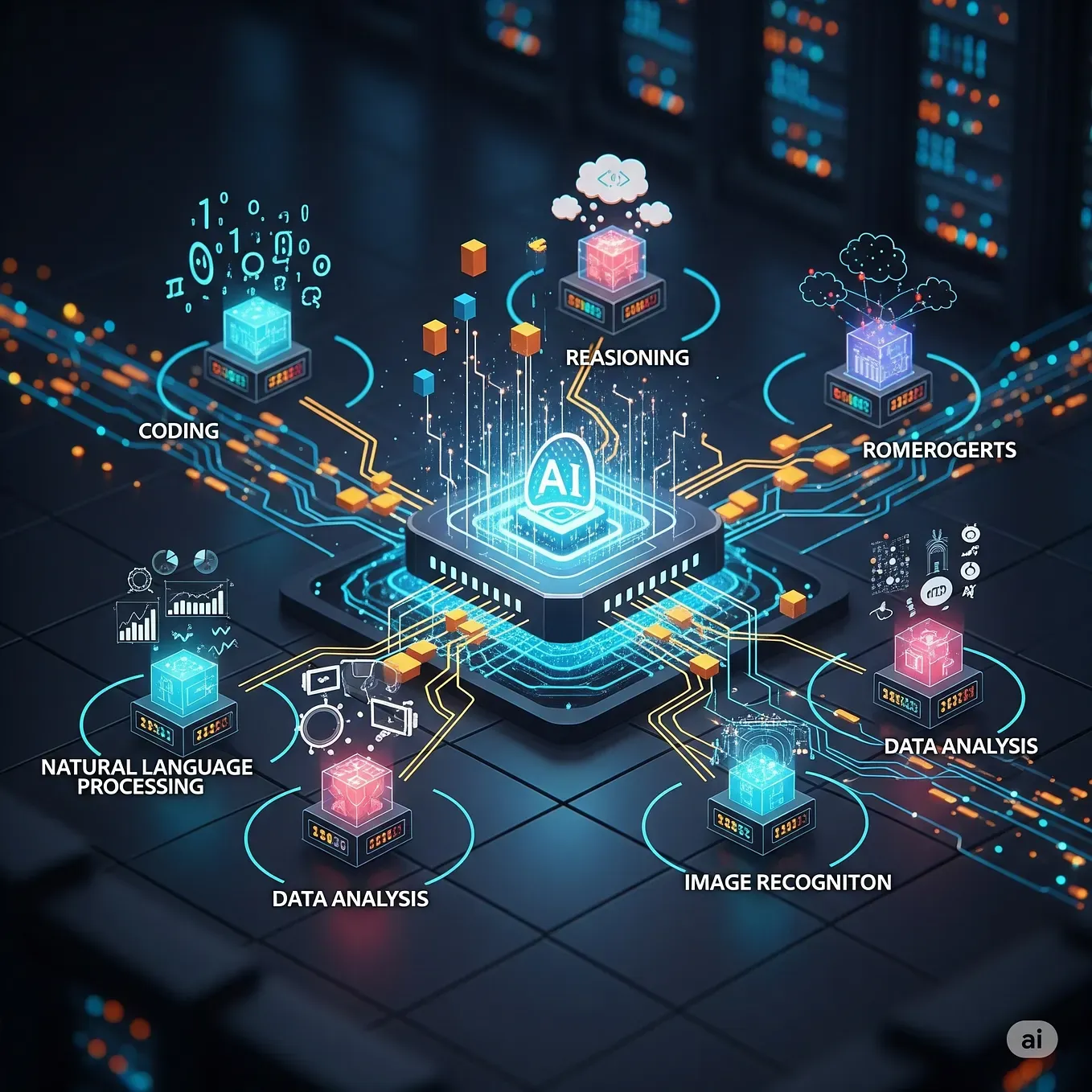
In the rapidly evolving landscape of enterprise technology, two powerful forces are converging: the rock-solid reliability of Java app development and the transformative potential of custom Gen AI solutions. While off-the-shelf generative AI tools have captured headlines, forward-thinking enterprises are discovering that true competitive advantage lies in building secure, tailored Gen AI solutions on the foundation of Java's enterprise-grade architecture.
The challenge facing organizations today isn't whether to adopt AI, but how to integrate it securely and effectively into existing enterprise systems. Generic AI solutions expose sensitive data to third-party platforms, lack customization for proprietary workflows, and fail to meet stringent compliance requirements. The answer? Leveraging Java's proven stability, security model, and scalability to build custom Gen AI solutions that deliver real business value while maintaining enterprise control.
I. Why Java Remains Critical for Enterprise Gen AI Backends
Despite the proliferation of languages in the AI ecosystem, Java continues to dominate enterprise application development for compelling reasons. When it comes to deploying Gen AI solutions at scale, Java's maturity and enterprise focus provide distinct advantages that newer languages struggle to match.
Java's Core Strengths: Scalability, Security, and the JVM Advantage
Unparalleled Security Architecture
Java's security model, built into the JVM, provides multiple layers of protection critical for handling sensitive data in custom Gen AI solutions. The JVM's sandboxing capabilities, bytecode verification, and security manager ensure that AI models can't inadvertently access unauthorized resources. This becomes paramount when processing proprietary business data through large language models.
Enterprise-Grade Scalability
The JVM's mature garbage collection, just-in-time compilation, and thread management make Java app development ideal for handling the demanding workloads of Gen AI solutions. When your RAG pipeline needs to process thousands of concurrent user queries against vector databases, Java's proven ability to scale horizontally and vertically provides the reliability enterprises demand.
Ecosystem Maturity
With frameworks like Spring Boot and Jakarta EE, Java app development offers battle-tested tools for microservices architecture, dependency injection, and API management. These capabilities integrate seamlessly with custom Gen AI solutions, allowing organizations to build sophisticated AI pipelines that work harmoniously with existing enterprise infrastructure.
Bridging the Gap: Integrating LLMs into the Existing Java Ecosystem
The integration of large language models into Java app development environments has evolved significantly with specialized libraries and SDKs. Two frameworks have emerged as leaders: Spring AI and LangChain4J.
Spring AI extends the Spring ecosystem to provide seamless integration with major LLM providers including OpenAI, Azure OpenAI, Google Gemini, and AWS Bedrock. It offers standardized interfaces for chat models, embedding models, and vector stores, making it straightforward to build custom Gen AI solutions that can switch between providers without code rewrites.
LangChain4J brings comprehensive orchestration capabilities to Java app development, enabling complex AI workflows including chains, agents, and tools. It supports advanced patterns like retrieval augmented generation, function calling, and prompt templating, all while maintaining type safety and compile-time validation that Java developers expect.
II. Architecting Custom Gen AI Solutions: The RAG Model
Retrieval Augmented Generation represents the cornerstone architecture for building enterprise custom Gen AI solutions. RAG addresses the fundamental limitations of standalone LLMs by grounding AI responses in your organization's proprietary data, significantly reducing hallucinations while maintaining data sovereignty.
Understanding Retrieval Augmented Generation (RAG) Architecture
What is RAG?
Retrieval Augmented Generation in Java is typically implemented using libraries like Spring AI or LangChain4J to securely connect enterprise data, stored in vector databases, to Large Language Models for grounded, factual responses. The RAG pipeline consists of three core components:
1. Data Ingestion and Vectorization: Your enterprise documents, databases, and knowledge bases are processed and converted into vector embeddings
2. Semantic Search: User queries are vectorized and matched against your data store to retrieve the most relevant context
3. Augmented Generation: Retrieved context is combined with the user query and sent to the LLM for accurate, grounded response generation
Vector Databases and Data Preparation in a Java Pipeline
A vector database serves as the knowledge foundation for your custom Gen AI solutions, storing mathematical representations of your enterprise data in a format optimized for semantic search. Leading vector databases compatible with Java app development include:
• Pinecone: Fully managed with excellent Java SDK support and millisecond query latency
• Weaviate: Open-source with native Java client and hybrid search capabilities
• PostgreSQL with pgvector: Leverage existing PostgreSQL infrastructure with vector extension
• Elasticsearch: Add vector search to existing Elasticsearch deployments
The data preparation pipeline in Java app development typically involves document chunking strategies that balance context preservation with retrieval accuracy, metadata enrichment for filtering, and periodic re-indexing to keep the knowledge base current.
Key Java Tools for Gen AI: Leveraging Spring AI and LangChain4J
Spring AI in Action
Spring AI provides seamless integration with the Spring ecosystem for building Gen AI solutions. A typical implementation leverages Spring's dependency injection, configuration management, and auto-configuration to create production-ready AI services. The framework offers standardized interfaces that abstract provider-specific implementations, enabling you to switch between OpenAI, Azure, AWS Bedrock, or Google Vertex AI with minimal code changes.
LangChain4J Capabilities
LangChain4J offers a complete toolset for complex LLM orchestration in Java app development. The framework excels at building multi-step AI workflows, managing conversation memory, implementing tool use and function calling, and orchestrating multiple LLM calls into cohesive pipelines. Its type-safe approach ensures compile-time validation of AI interactions, catching errors before they reach production.
Java vs. Python for LLM Integration: A Comparative Analysis
III. Practical Steps for Modern Java App Development (AI-Enabled)
Building custom Gen AI solutions with Java app development requires careful environment setup, performance optimization, and security considerations. This section provides practical guidance for development teams embarking on AI integration projects.
Environment Setup: JDK, Gradle/Maven, and AI SDKs
Core Development Environment
Modern Gen AI solutions require JDK 17 or higher to leverage enhanced features including pattern matching, records for data transfer objects, and improved garbage collection. Spring Boot 3.x projects should use Gradle 8+ or Maven 3.9+ for optimal dependency management.
Essential Dependencies
For Spring AI integration, include spring-ai-openai-spring-boot-starter or your chosen provider's starter. Vector database clients like Pinecone Java SDK or Weaviate Java Client should be added based on your storage strategy. LangChain4J requires langchain4j and provider-specific dependencies like langchain4j-open-ai or langchain4j-azure-open-ai.
Development Tools: Android Studio remains the premier IDE for Java app development targeting mobile platforms, while IntelliJ IDEA Ultimate offers superior support for enterprise Spring applications and AI library integrations. Both provide excellent debugging capabilities essential for troubleshooting complex RAG pipelines.
Performance Considerations: Multithreading and Asynchronous Calls
Java app development for Gen AI solutions demands careful attention to concurrency patterns. LLM API calls typically range from 500ms to several seconds, making synchronous implementations unacceptable for production systems serving multiple users.
Asynchronous Processing
Leverage Spring's async capabilities with CompletableFuture to handle LLM calls without blocking request threads. This approach enables your application to maintain responsiveness while waiting for AI responses, crucial for user experience in custom Gen AI solutions.
Connection Pooling
Configure HTTP client connection pools appropriately for your LLM provider. Most providers allow 10-50 concurrent connections per API key. Implement retry logic with exponential backoff to handle rate limits gracefully.
Caching Strategy: Implement multi-tier caching for Gen AI solutions. Semantic caching at the application layer can dramatically reduce costs by serving similar queries from cache. Vector search results should be cached with appropriate TTLs based on your data volatility.
Secure Deployment and LLMOps for Java Applications
Security for custom Gen AI solutions extends beyond traditional application security to encompass prompt injection prevention, output validation, and data lineage tracking. The OWASP Top 10 for LLM Applications provides essential guidance that all Java app development teams should implement.
Input Sanitization
Validate and sanitize all user inputs before inclusion in LLM prompts. Implement content filters to detect and reject potentially malicious prompt injection attempts. Never directly concatenate user input into system prompts without proper escaping and validation.
Secrets Management
API keys for LLM providers should never be hardcoded. Leverage Spring Cloud Config, AWS Secrets Manager, or Azure Key Vault for secure credential storage. Rotate keys regularly and implement separate keys for development, staging, and production environments.
LLMOps Implementation: Establish comprehensive monitoring for your Gen AI solutions. Track token usage, response latencies, error rates, and quality metrics. Implement prompt versioning and A/B testing frameworks to continuously improve AI outputs while maintaining auditability.
IV. High-Impact Use Cases for Custom Gen AI Solutions in Java
The convergence of Java app development and custom Gen AI solutions unlocks transformative applications across industries. These use cases demonstrate proven implementations delivering measurable business value.
Enterprise Search and Knowledge Retrieval (Internal Copilots)
Traditional enterprise search frustrates users with keyword-based limitations and irrelevant results. Custom Gen AI solutions built with RAG architecture transform this experience by enabling natural language queries across your entire organizational knowledge base.
Implementation Approach
A Java app development team can build an internal copilot that indexes documents, wikis, code repositories, and historical communications. Employees query in natural language, and the system retrieves relevant information with cited sources, dramatically reducing time spent searching for information.
Business Impact: Industry leaders leveraging custom Gen AI solutions for enterprise search report up to 30 percent reduction in knowledge retrieval time, improved employee onboarding speed, and increased productivity across knowledge-intensive roles.
Automated Code Generation and Testing in Java Environments
Gen AI solutions trained on your codebase can significantly accelerate development velocity. By understanding your architectural patterns, coding standards, and existing implementations, these systems generate contextually appropriate code that integrates seamlessly with your Java app development workflows.
Code Generation
Implement a custom copilot that suggests boilerplate code, generates unit tests, and proposes implementation approaches based on your team's established patterns. Unlike generic tools, custom Gen AI solutions respect your architectural decisions and security requirements.
Automated Testing: Generate comprehensive test suites by analyzing method signatures and business logic. The AI suggests edge cases, generates test data, and creates meaningful assertions, increasing code coverage while reducing manual testing effort.
Intelligent Data Processing and Workflow Automation
Organizations struggle with unstructured data buried in documents, emails, and legacy systems. Custom Gen AI solutions excel at extracting, structuring, and routing this information into actionable workflows.
Document Processing
Build Java app development solutions that automatically extract entities from contracts, classify support tickets, and route documents to appropriate departments. The AI understands context and nuance that rule-based systems miss.
Workflow Orchestration: Integrate Gen AI solutions with existing business process automation tools. The system suggests next steps, identifies bottlenecks, and proposes process improvements based on historical data patterns.
V. Partnering for Success: Building Custom Gen AI Solutions
Successfully implementing custom Gen AI solutions requires more than technical expertise. Organizations need partners who understand both the intricacies of Java app development and the strategic implications of AI integration.
Strategic Assessment
The journey begins with identifying high-value use cases where Gen AI solutions deliver measurable ROI. This involves analyzing existing workflows, data availability, and integration requirements to prioritize implementations with clear business impact.
Architectural Design
Design custom Gen AI solutions that integrate seamlessly with your existing Java app development infrastructure. This includes selecting appropriate vector databases, designing RAG pipelines, choosing LLM providers, and establishing security boundaries.
Implementation and Iteration
Build production-ready systems following enterprise development standards. Implement comprehensive testing, establish monitoring, and create feedback loops for continuous improvement. The typical time-to-market for a custom Gen AI solution built on Java ranges from 8 to 16 weeks depending on scope and integration complexity.
Knowledge Transfer: Ensure your team can maintain and evolve the Gen AI solutions independently. This includes documentation, training on LLMOps practices, and establishing governance frameworks for AI system management.
Ready to Transform Your Enterprise with Gen AI?
If you're ready to securely integrate Gen AI solutions into your Java app development stack and unlock the transformative potential of enterprise AI, we're here to help. Our team specializes in building custom Gen AI solutions that respect your data sovereignty, integrate with existing systems, and deliver measurable business value.
Conclusion
The convergence of Java app development and custom Gen AI solutions represents a pivotal moment for enterprise technology. Java's robust security model, proven scalability, and mature ecosystem provide the ideal foundation for deploying Gen AI solutions that meet enterprise requirements for reliability, compliance, and performance.
As organizations move beyond experimentation with generic AI tools, the competitive advantage shifts to those who can build custom Gen AI solutions tailored to their unique data, processes, and strategic objectives. The frameworks, patterns, and best practices outlined in this guide provide a roadmap for Java app development teams to successfully navigate this transformation.
The future of enterprise belongs to organizations that can harness AI's transformative power while maintaining the security, stability, and reliability that Java has provided for decades. By combining these strengths, forward-thinking enterprises are building Gen AI solutions that don't just automate existing processes but fundamentally reimagine what's possible in knowledge work, decision-making, and customer experience.
Frequently Asked Questions
Is Java still relevant for modern Gen AI solutions or should we use Python?
Java remains highly relevant and often superior for production Gen AI solutions. While Python excels at ML model training and prototyping, Java's superior enterprise scalability, security via the JVM, and mature deployment tooling make it the preferred choice for mission-critical AI applications. The JVM's proven ability to handle high-concurrency workloads, combined with frameworks like Spring AI and LangChain4J, enables organizations to deploy custom Gen AI solutions with the reliability and compliance posture enterprises demand.
What specific Java frameworks support LLM and RAG integration?
The leading Java frameworks for custom Gen AI development are Spring AI, providing seamless integration with the Spring ecosystem and major LLM providers like OpenAI, Azure, AWS Bedrock, and Google Vertex AI, and LangChain4J, offering a complete toolset for complex LLM orchestration including chains, agents, memory management, and tool use. Both frameworks support RAG implementations with native integrations for vector databases like Pinecone, Weaviate, and PostgreSQL with pgvector.
How do Custom Gen AI solutions differ from using public tools like ChatGPT?
Custom Gen AI solutions provide complete data sovereignty, ensuring your proprietary information never leaves your infrastructure or is used to train third-party models. They integrate seamlessly with existing enterprise systems and databases, respect your security policies and compliance requirements, can be fine-tuned on your specific domain knowledge, and offer full control over costs, performance, and feature roadmap. Public tools like ChatGPT serve general purposes but cannot access your internal data securely or adapt to your specific business context without exposing sensitive information.
Can Java App Development handle the performance demands of real-time Gen AI inference?
Absolutely. Java app development excels at real-time Gen AI solutions through optimized asynchronous processing, connection pooling, and intelligent caching strategies. The JVM's mature threading model and just-in-time compilation enable Java applications to efficiently handle thousands of concurrent LLM requests. By implementing non-blocking I/O patterns with CompletableFuture and Project Loom's virtual threads, Java backends can maintain millisecond response times for vector search while managing multiple parallel LLM API calls.
What is the typical time-to-market for a custom Gen AI solution built on Java?
Time-to-market for production-ready custom Gen AI solutions built with Java app development typically ranges from 8 to 16 weeks, depending on scope and integration complexity. This timeline includes strategic assessment, architectural design, RAG pipeline implementation, security hardening, testing, and deployment. Organizations with existing Spring Boot infrastructure can often accelerate timelines by leveraging Spring AI's auto-configuration capabilities. The use of established Java app development patterns and frameworks significantly reduces risk compared to building with less mature tooling.
What role does a Vector Database play in a Java Gen AI pipeline?
A vector database serves as the knowledge foundation for RAG-based Gen AI solutions, storing mathematical representations of your enterprise data optimized for semantic search. In a Java app development context, the vector database enables your application to quickly retrieve the most relevant context for user queries by comparing vector embeddings. This retrieved context is then combined with the user's question and sent to the LLM, ensuring responses are grounded in your proprietary data rather than relying solely on the model's training. Leading vector databases like Pinecone, Weaviate, and PostgreSQL with pgvector offer robust Java client libraries for seamless integration.
Additional Resources
For teams looking to deepen their understanding of Java app development with Gen AI solutions, the following resources provide valuable guidance:
• Spring AI Documentation - Comprehensive guide to Spring AI integration patterns
• LangChain4J GitHub Repository - Open-source Java framework for LLM applications
• OWASP Top 10 for LLM Applications - Essential security guidance for AI systems
• Anthropic Prompt Engineering Guide - Best practices for prompt design and optimization
The intersection of Java's enterprise reliability and generative AI's transformative capabilities represents the future of business technology. Organizations that master this convergence will lead their industries into the next decade of innovation.